When narrow alleyways block a Golders Green move: fixes
Posted on 10/06/2026

When narrow alleyways block a Golders Green move: fixes that actually work
Golders Green moves can be straightforward right up until the van meets a narrow alleyway, a tight turn, or a courtyard entrance that looks a bit friendlier on the viewing day than it does on moving morning. If you are dealing with when narrow alleyways block a Golders Green move: fixes, you are not alone, and it is rarely a dead end. Usually, it is an access problem with a few workable solutions: smaller vehicles, timed loading, shuttle runs, more dismantling than planned, or temporary storage. The trick is choosing the right fix before the day turns into a stressed-out shuffle with a sofa stuck halfway and someone muttering, "well, this wasn't in the plan."
This guide breaks down what actually helps in real-life London conditions, especially around NW11 properties where alley access, stairwells, kerbs, and parking restrictions can all collide at once. You will find practical fixes, planning steps, mistakes to avoid, and a clear checklist you can use before the van arrives.
Why narrow alleyway access matters
A blocked or barely usable alley is not just an inconvenience. It changes the whole shape of a move. A van that cannot safely reach the property means longer carrying distances, more labour, a slower loading pace, and a greater chance of damage. In a built-up part of Golders Green, that can be the difference between a tidy two-hour load and an all-day slog with tired arms, scratched doorframes, and a schedule that starts slipping before noon.
It also matters because access problems affect more than the item being carried. They influence parking, timing, neighbours, noise, and whether the crew can work safely. If your route includes a tight side passage, awkward slope, or a lane with bins, scooters, and surprise garden walls, you need a plan that fits the street, not just the house.
Truth be told, a lot of moving stress comes from assuming the van can simply "get close enough." Sometimes it can. Sometimes it absolutely cannot. The smarter move is to treat access like a core part of the job, not a side issue. That mindset alone prevents a lot of grief.
Expert summary: when an alleyway blocks the direct route, the best fix is rarely one single trick. It is usually a mix of route planning, vehicle choice, dismantling, carrying strategy, and timing. The earlier you work that through, the smoother everything feels on the day.
How narrow alleyway fixes work in practice
Most access fixes fall into one of five practical categories. You can think of them as layers rather than separate answers. Sometimes one is enough; sometimes you need three.
1. Reduce the size of what is moving
If a wardrobe, bed frame, dining table, or sofa cannot pass cleanly through an alley, it may need partial or full dismantling. That sounds obvious, but people often leave it too late. Removing legs, arms, shelves, doors, and fixtures can change the whole equation. A piece that looked impossible may suddenly become manageable.
For bigger items, this is where furniture-specific planning helps. If you are also moving bulky pieces, it can be useful to look at furniture moving support in Golders Green and think in terms of shape, not just weight.
2. Change the vehicle strategy
A full-size removal van is not always the best first choice for tight access. In some cases, a smaller vehicle can get you closer to the property and reduce carrying distance. In other cases, a larger van stays parked where it can, and a smaller shuttle vehicle or manual carry completes the last stretch. There is no prize for forcing one big vehicle into a lane that clearly wants something smaller. Let's face it, roads do not care about our plans.
If you are comparing movement options, the service description in the removals services overview can help you think through which setup fits the property rather than just the item list.
3. Create a shuttle or relay system
This is a very common fix when the vehicle cannot park beside the entrance. The van parks where it safely can, then items are carried in stages using trolleys, dollies, or team hand-carry. It is not glamorous, but it works. In tight Golders Green streets, a relay system is often the difference between "we cannot get in" and "right, we will handle this another way."
4. Adjust timing and loading order
Timing matters more than people expect. Early morning moves can avoid school traffic, delivery vans, and the general squeeze of the day. Better still, you can load the hardest items first while everyone still has energy and the alley is not clogged with bins or passers-by. Small timing decisions can make narrow access feel a lot less hostile.
If timing is especially tight, a same-day option may help keep the move moving. Same-day removals in Golders Green can be useful when plans shift quickly or an access window is unexpectedly short.
5. Use temporary storage or staged moves
Sometimes the alley problem is only half the story. The other half is volume. Too many boxes, too many bulky items, not enough room to manoeuvre. Staging part of the move into storage can reduce pressure and make the narrow approach much easier. This is especially helpful if you are moving from a flat with stairs, a shared entrance, or a cramped rear passage.
For longer staging needs, storage in Golders Green can be a practical pressure-release valve, not a failure. It is simply a different sequence.
Key benefits and practical advantages
Fixing narrow alley access is not only about getting things through. It changes the quality of the move in a few important ways.
- Less risk of damage: tighter routes often mean more brushing against walls, rails, and door edges. Better planning reduces that risk.
- Faster load and unload times: a good access plan can save a surprising amount of walking and waiting.
- Lower physical strain: shorter lifts and smarter carrying routes mean less wear on the team and less chance of injury.
- More predictable costs: if access is dealt with early, you are less likely to face last-minute chaos or extended labour time.
- Better neighbour relations: fewer blocked paths, less noise, and less loitering outside other people's doors. Everyone appreciates that.
There is also a confidence benefit that people often overlook. Once you know the access issue has been addressed properly, the rest of the move feels calmer. Boxes still need lifting. Sofas still need turning at odd angles. But the stress levels drop, and that changes the whole day.
Who this is for and when it makes sense
This topic matters if any part of your move involves a narrow side alley, rear access lane, gated passage, basement approach, or a shared walkway that is technically usable but practically awkward. It is especially relevant for:
- flat moves with rear access only
- older Victorian or converted properties
- house moves with side passages that are too tight for bulky furniture
- student moves with lots of small items but limited access
- office moves where equipment has to pass through service corridors or courtyards
- urgent moves where there is little time to re-plan
If you are moving a single heavy item, the problem can look different. A piano, for example, may need specialist handling rather than just a stronger pair of hands. In that case, piano removals in Golders Green may be the safer route, because awkward access and fragile instruments are not a great combination.
Equally, if you are working with a smaller household or a one-room move, you may get more flexibility from a man with a van in Golders Green setup, especially where access is tight but the load is modest.
Step-by-step guidance
Here is the practical order I would use if a narrow alley could block the move. No drama, just a workable sequence.
- Measure the access properly. Do not guess. Measure alley width, bends, overhead restrictions, kerb height, gate openings, and any pinch points. If the route has a weird dog-leg turn, measure that too. A tape measure can save a lot of arguments later.
- Identify the largest items first. Sofas, wardrobes, mattresses, beds, cabinets, desks, and appliances usually dictate the plan. If those fit, the boxes will probably follow. If they do not, the rest of the move needs rethinking.
- Decide what should be dismantled. A bed base with slats, a wardrobe with doors removed, or a dining table with legs detached can be much easier to carry. For mattress and bed handling, a useful read is this guide on bed and mattress relocation.
- Choose the access method. Direct van-to-door, small-van transfer, relay carry, stair carry, or mixed approach. Pick one that fits the property rather than the other way round.
- Set the loading order. Heavy and awkward items first, then medium items, then boxes, then fragile pieces. That way, if access becomes slower than expected, the hardest bits are already dealt with while energy is highest.
- Protect the route. Use covers, edge protection, and floor runners where needed. Even a narrow alley can be protected if the team is careful and prepared.
- Build a fallback plan. If the van cannot get through, where does it wait? If the alley is blocked by another vehicle, how will you switch to carry mode? A move without a fallback is just hope in a hi-vis vest.
One small but important point: do not leave decluttering until after you discover the access problem. That is backwards. The lighter the move, the easier the fix. A little ruthless sorting now usually pays off later, and if you want a sensible starting point, these decluttering methods are a good companion to access planning.
Expert tips for better results
These are the things that tend to make a real difference on the day.
- Walk the route twice. Once with eyes on the obvious route, and once looking for the hidden nuisance: a low branch, a step, a drain cover, or a narrow gate latch.
- Use photo checks. A quick photo or short video of the alley can be more useful than a vague description. You will spot details that memory likes to skip.
- Pad the awkward edges. Old brick corners and metal rails can be unforgiving. Small amounts of protection go a long way.
- Keep boxes sensible. Overpacked boxes turn into tiny concrete blocks. That is never a good plan in a narrow passage.
- Leave a clear handoff zone. If there is a place where items can be staged before going into the property or the van, use it. It keeps the alley from becoming a traffic jam.
- Think in routes, not rooms. People often plan the move room by room, but access problems are route problems first. Fix the route and the rooms become easier.
A quieter tip, but a good one: protect your best furniture before it becomes a casualty of a tight turn. If you have a sofa that needs to stay clean and presentable through storage or transit, these sofa storage insights are worth a look.
And if your move is already feeling a bit frantic, do not forget that calm planning often beats last-minute muscle. There is a reason experienced crews spend so much time on preparation. Once the lift and carry starts, the decisions are harder.

Common mistakes to avoid
Most access problems become worse because of avoidable mistakes. The good news is, they are predictable.
- Assuming the van will fit because a car does. Very different thing. Very different.
- Forgetting about turning space. A van may fit straight in but fail at the turn.
- Not checking for loading restrictions. Parking and stopping rules can affect where the vehicle can even wait.
- Leaving dismantling until moving day. That is a classic panic trigger.
- Trying to move one oversized item without help. Especially if it is heavy, awkward, or valuable.
- Packing everything as if access will be easy. Dense boxes and sloppy labels make the carry route harder, not easier.
- Ignoring weather. Wet steps, slippery paving, and dark corners change the risk profile fast. A mild drizzle in London can suddenly feel like a proper nuisance.
There is also a planning mistake that is less obvious: not asking the right questions early enough. If you wait until the crew arrives to discuss the alley width, the plan is already late. Better to sort the access issue first, then the rest falls into place.
Tools, resources and recommendations
You do not need fancy gear to handle a difficult alleyway move, but the right tools make the work safer and cleaner.
- Tape measure: basic but essential for width, height, and turning points.
- Protective blankets and corner covers: useful for tight squeezes and sharp edges.
- Furniture dollies or sack trucks: helpful for flat ground, though not for every stair or threshold.
- Labelled packing supplies: if items are easy to identify, they are easier to stage and reload.
- Disassembly tools: Allen keys, screwdrivers, and small bags for fixings. Keep screws with the item, not in a random kitchen drawer.
- Storage option: handy if the narrow access means you need a staged move rather than a single sweep.
If you are still building your move plan, the following pages can help with related decisions: packing supplies and boxes, house removal support, and flat removals in Golders Green. They are useful when access and packing choices have to work together rather than compete.
For people who want a little more context on move-day pressure and practical calm, this guide to keeping stress at bay during a move ties in nicely with the access side of things.
Law, compliance, standards, or best practice
Access planning is not just about convenience. It also touches safety and basic moving best practice. In the UK, movers and property occupiers generally need to think about safe manual handling, sensible vehicle positioning, and avoiding unnecessary obstruction. If a route is unsafe, awkward, or likely to cause damage, the right choice is to change the method, not force it.
From a best-practice point of view, a good move should involve:
- careful assessment of access before loading starts
- safe lifting and carrying techniques
- clear communication between the crew and the customer
- appropriate protection for floors, walls, and items
- insurance awareness where higher-risk items or complex access are involved
If you are handling heavy pieces or lifting without much help, it is worth reading practical safety material such as achieving heavy lifting success alone and the science behind lifting technique. They reinforce a simple point: good body mechanics matter, especially where space is tight and mistakes are expensive.
For risk-managed moves, it also helps to understand service terms and safety arrangements before the day, including insurance and safety information and the practical detail in the health and safety policy. That is not paperwork for the sake of it; it is part of a sensible move.
Options and comparison table
When a narrow alley blocks the direct route, the choice usually comes down to one of a few approaches. The best one depends on furniture size, distance from van to door, time available, and how much labour you want to use.
| Method | Best for | Pros | Trade-offs |
|---|---|---|---|
| Direct access with a larger van | Wide enough lanes and straightforward turns | Fast, efficient, fewer handoffs | Not suitable where the alley is tight or blocked |
| Smaller van access | Short, narrow, or awkward streets | Easier positioning, less risk of obstruction | May need more trips or more careful planning |
| Shuttle carry from parked van | Alleys blocked by width, not by distance | Flexible, practical, often realistic in London | More manual carrying and coordination needed |
| Dismantle and reassemble | Large furniture that will not turn safely | Can turn an impossible item into a workable one | Takes time and care with fixings |
| Staged move with storage | Large volume, multiple bulky items, or complex timing | Reduces pressure and lets access issues be handled gradually | Requires extra coordination |
There is no single perfect method. That is the honest answer. The right fix is the one that respects the property layout and the furniture at the same time.
Case study or real-world example
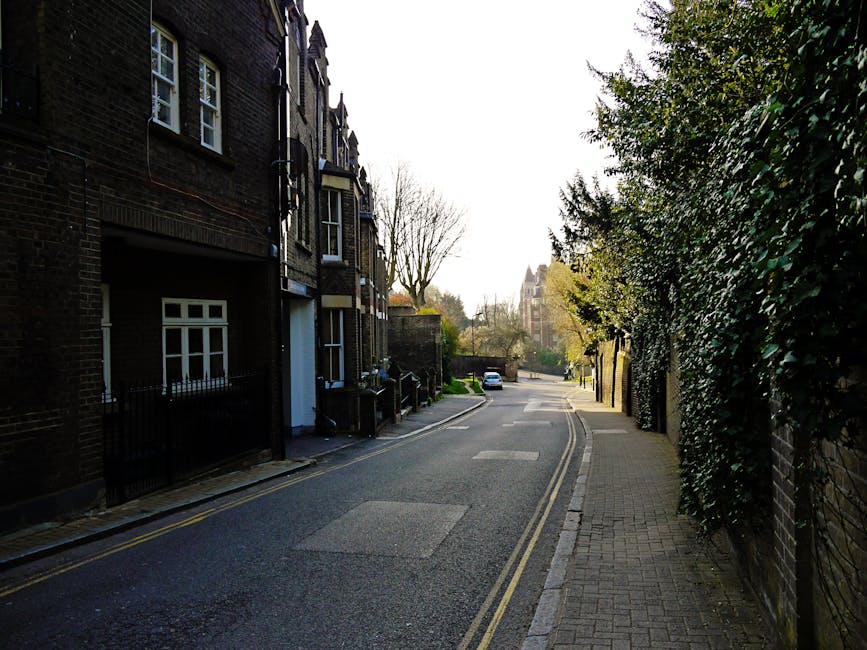
Here is a realistic scenario from a Golders Green-style move. A family was leaving a ground-floor flat with rear alley access only. The alley was narrow enough for one person at a time in places, with a bend near the back gate and a low-ish wall that made turning furniture tricky. The sofa looked fine in the front room. Out in the alley, it became a different beast entirely.
The first thought was to push straight through with a standard van and hope for the best. That would have been a mess. Instead, the plan changed before move day: the sofa was checked for detachable parts, the bed frame was dismantled, boxes were consolidated, and the van was parked where it could unload safely. The final stretch became a carry-and-stage process. Not quick, but controlled.
The result was simple: no damage, no blocked passage, and no last-minute panic around the neighbours' bins. It was one of those moves where the sensible choice felt boring beforehand and brilliant afterwards. That is often how good access planning looks.
In another case, a small office move used a mixed approach: larger items were moved early in the morning, while desktop boxes were carried later once the alley was clear. The change in timing made a bigger difference than expected. A quiet lane at 7:30 a.m. can feel very different from the same lane at lunchtime. Day and night, almost.
Practical checklist
Use this before the move if you suspect the alley could be a problem.
- Measure the alley width, height restrictions, and turning points.
- Check whether the van can legally and safely stop nearby.
- List the largest items first.
- Decide which furniture should be dismantled.
- Confirm whether a smaller vehicle or shuttle carry is needed.
- Prepare blankets, straps, tape, and tools.
- Label boxes clearly and keep heavy boxes manageable.
- Plan where items will be staged if the van cannot reach the door.
- Protect floors, corners, and railings.
- Build in extra time for awkward access.
- Keep a backup plan in case another vehicle blocks the route.
- Review safety and insurance details before the day starts.
If your move includes multiple item types, a broader look at removal services in Golders Green can help you shape the process around access, loading, and handling needs. And if the move is more specialised or time-sensitive, what to expect from an urgent same-day move is worth a read.
Get a free quote today and see how much you can save.
Conclusion
When narrow alleyways block a Golders Green move, the answer is usually not brute force. It is better planning, smarter carrying, realistic vehicle choice, and sometimes a staged approach that turns a difficult route into a manageable one. That may sound a bit unexciting, but moving rarely rewards drama. It rewards preparation.
If you remember one thing, make it this: access problems are solvable far more often than they first appear. A narrow passage can be a nuisance, yes, but it does not have to become the story of the day. With the right fix, the move stays controlled, safe, and far less stressful than the alley makes it look at first glance.
And honestly, once the last box is through, the relief is lovely. Properly lovely.